🔎 Paragliding Check Center
Professional glider checks and rescue repack, keeping you safe in the air, every flight.
Porosity test • Visual inspection • Laser line measurement • Trimming • Rescue repack
💬 Book a Check See Prices✈ Glider Check, Why It Matters
A paraglider is not a rigid aircraft, it is an intricate system of fabric, lines, and risers that is subjected to UV radiation, moisture, mechanical stress, and thousands of micro-deformations with every flight. Over time, these forces alter the wing's performance in ways that are invisible to the naked eye.
Your glider can look perfectly fine on the outside and still be dangerously out of specification. Porosity increases slowly, fabric that once held pressure now breathes air, making the wing sluggish, unstable under load, or prone to collapse in broken air. Lines stretch and shorten unevenly, a difference of just a few centimetres in a critical brake or steering line changes the entire flying behaviour of the wing. Risers wear at attachment points, and small holes in the canopy that are left untreated can grow under the stress of flight.
Regular checks are not just about airworthiness, they protect your investment. Catching a small hole early costs a fraction of what a major canopy repair does. Correcting trim drift before it becomes severe extends the life of your lines and avoids having to replace the full line set prematurely.
What We Check, Step by Step
A full check is a thorough technical inspection carried out systematically
Porosity Test
We measure how much air passes through the canopy fabric using a calibrated porosity meter. Over time, the coating on paraglider fabric breaks down, increasing porosity. A wing that exceeds manufacturer limits loses internal pressure rapidly under load, which directly affects collapse resistance and recovery behaviour. Catching this early is critical.
Visual Check, Canopy, Lines & Risers
We inspect every part of the wing systematically:
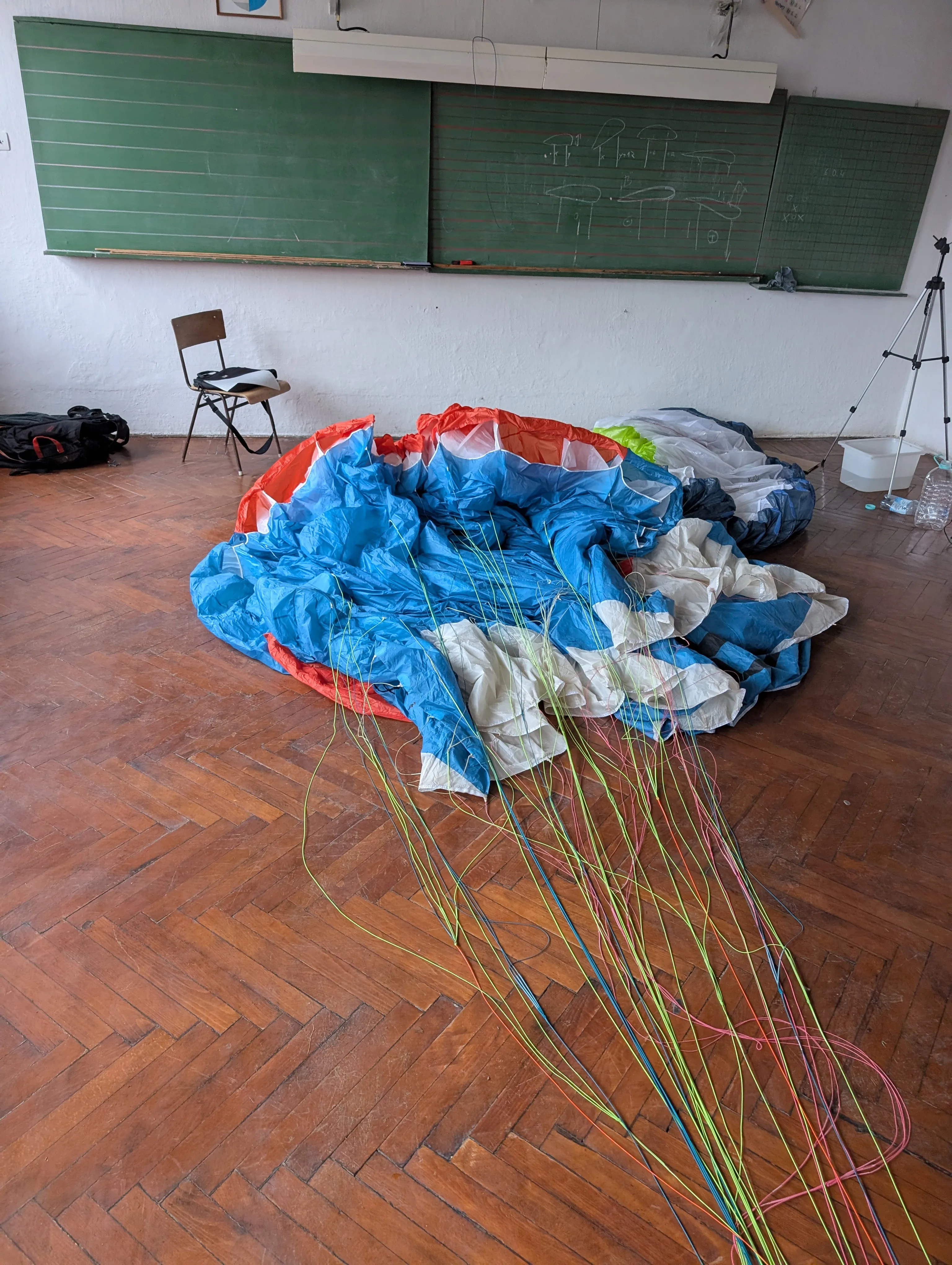
- Canopy: Every cell is opened and inspected for tears, delaminations, UV damage, dirty or clogged valves, and wear at line attachment points.
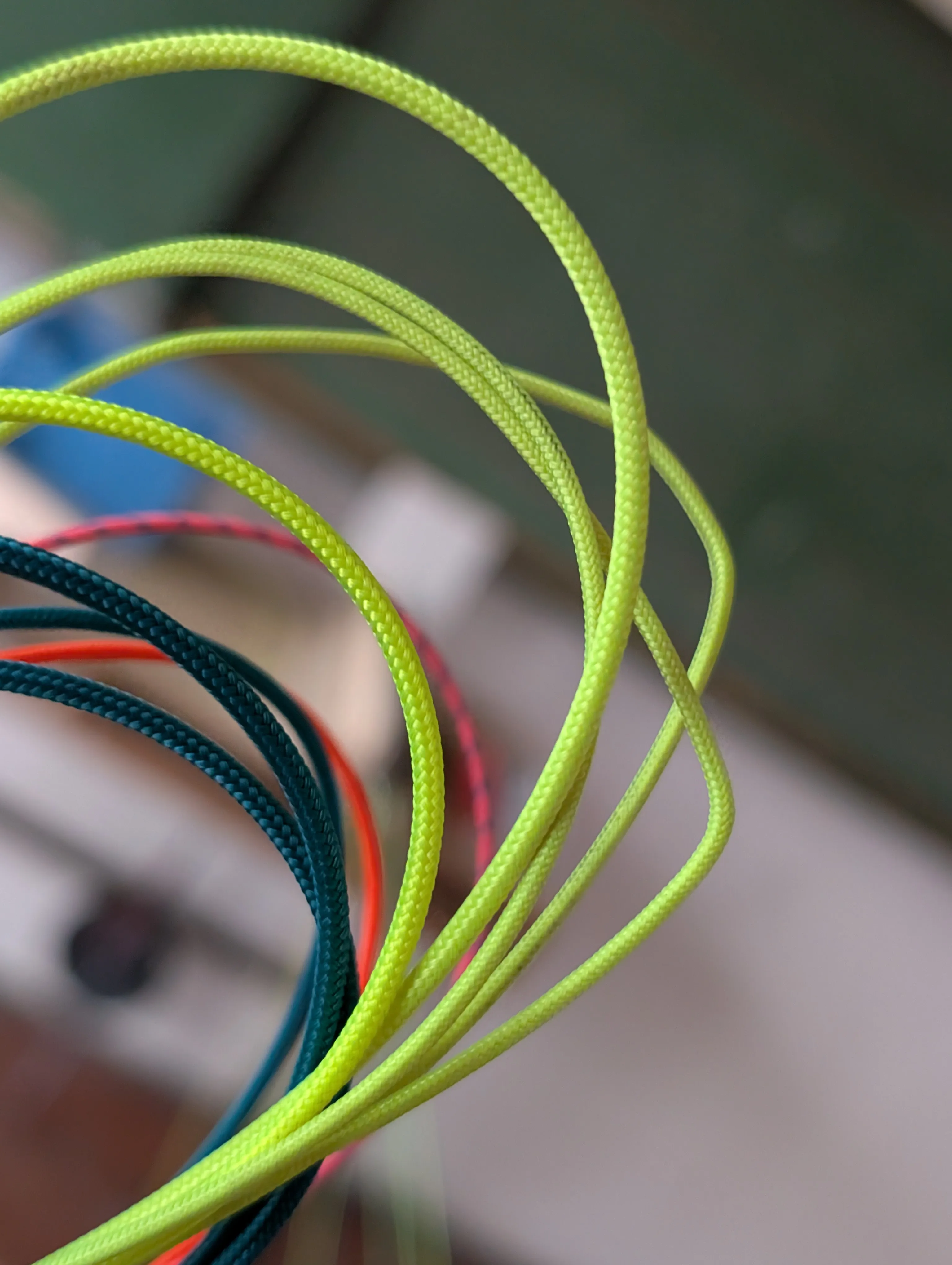
- Lines: Each line is checked for sheath damage, core exposure, knotting, abrasion, and asymmetric wear.
- Risers: All riser webbing, buckles, maillons, and soft links are inspected for wear, deformation, and corrosion.
Small holes and minor canopy damage found during inspection can be repaired on the spot, we carry standard materials for basic canopy repairs (extra charge applies for larger repairs).
Line Length Measurement, Laser
We measure every line group with a precision laser measuring system. Lines stretch and shrink unevenly over their service life due to UV exposure, humidity cycles, and load patterns. Even a difference of 2–3 cm in critical line groups can change the angle of attack, braking range, and stall speed of the glider.
Trimming, Restoring Manufacturer Specifications
Trimming means adjusting the line lengths to restore the glider to the symmetry and angle of attack defined by the manufacturer. This is not a modification, it is a restoration. A correctly trimmed glider flies as the designer intended: balanced left-to-right, with the correct angle of attack, optimal glide performance, and predictable handling.
Incorrect trim leads to asymmetric handling, tendency to turn one direction, altered stall characteristics, and increased pilot fatigue. After trimming, we confirm the glider meets all specification targets before it leaves our hands.
Small Hole Repair
Pinholes, small tears, and canopy damage found during the inspection can usually be repaired during the check. We use appropriate repair tape and materials matched to the fabric type. Small repairs done early prevent further damage under flight loads. Larger repairs or full panel replacements are quoted separately.
Full Check Report
After every full check, you receive a written report documenting all measurements, findings, and actions taken. This report serves as your official service record, important for insurance purposes, resale value, and your own peace of mind.
Rescue Repack, Your Last Line of Defence
Your rescue parachute is the one piece of equipment you will hopefully never need to use, and the one piece that absolutely must work perfectly if you do. Yet it is often the most neglected item in a paraglider pilot's kit.
A rescue parachute that has been packed into a small container and left untouched for years is not a reliable safety device. The fabric compresses and loses its ability to inflate rapidly. Bridle lines can stick together and delay deployment. Moisture that entered the container during storage can cause fabric degradation, mould, and line tangling. An improperly packed reserve may open late, partially, or not at all, and in a real emergency, every second counts.
💦
Best Practice: 2× per Year
Every 6 months is the best repack frequency for optimal results, better opening time, fabric condition, and overall reliability. This is the gold standard for active pilots who take rescue maintenance seriously.
👤
Miki's Recommendation
At least once a year. If you fly a lot, aim for every 6 months. Swiss conditions, high humidity, temperature swings, damp storage, make regular repacking essential. Also: use a square rescue (more pendulum-stable than circular). Most rescues have a 10-year lifetime, always check your manual.
🔒
After Every Deployment
Whether your rescue was deployed in an emergency or as part of a test flight, it must be fully repacked by a qualified technician before your next flight. Deployment wets, twists, and stresses all components. Never self-repack after an emergency deployment.
How We Repack
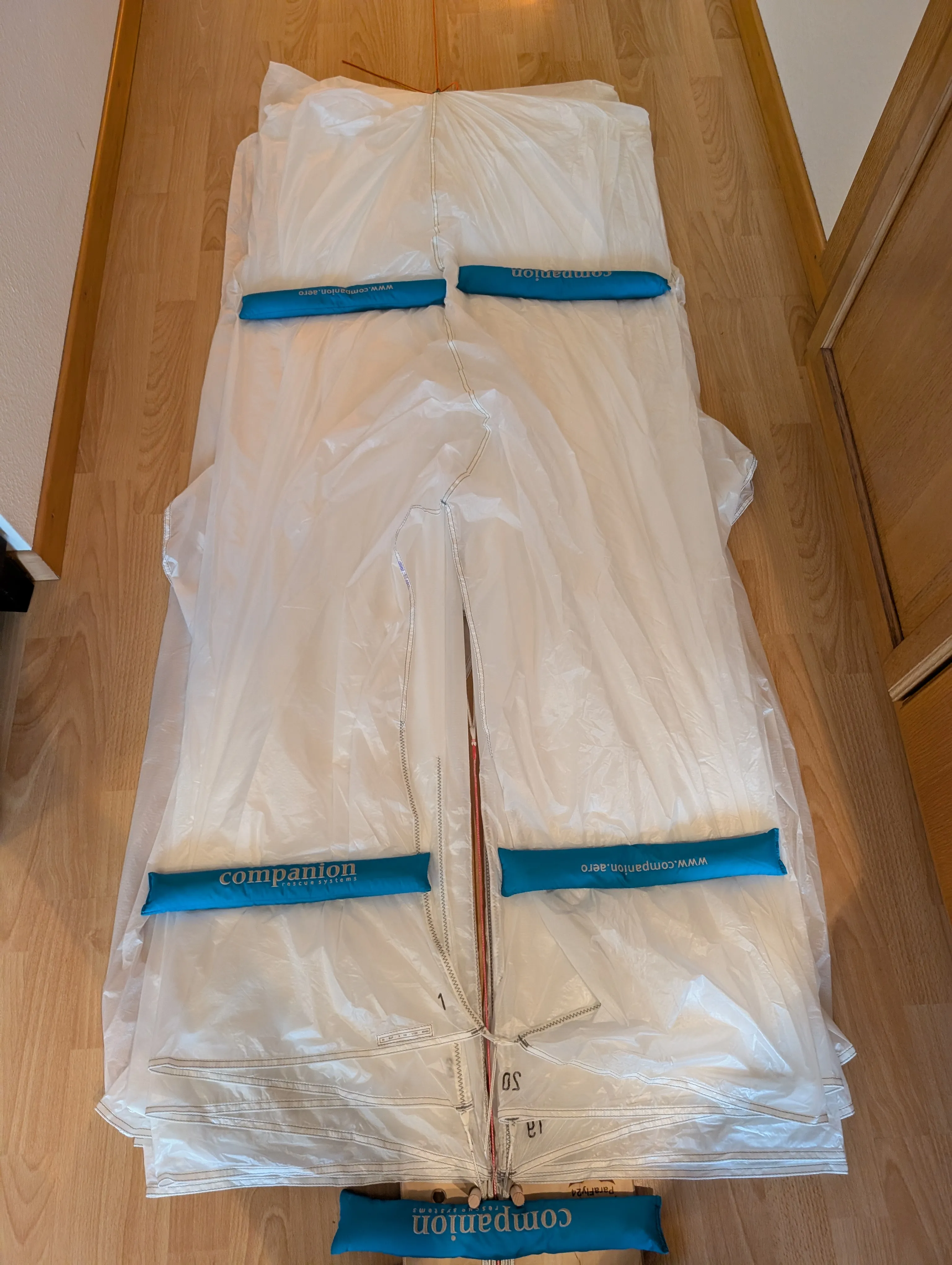
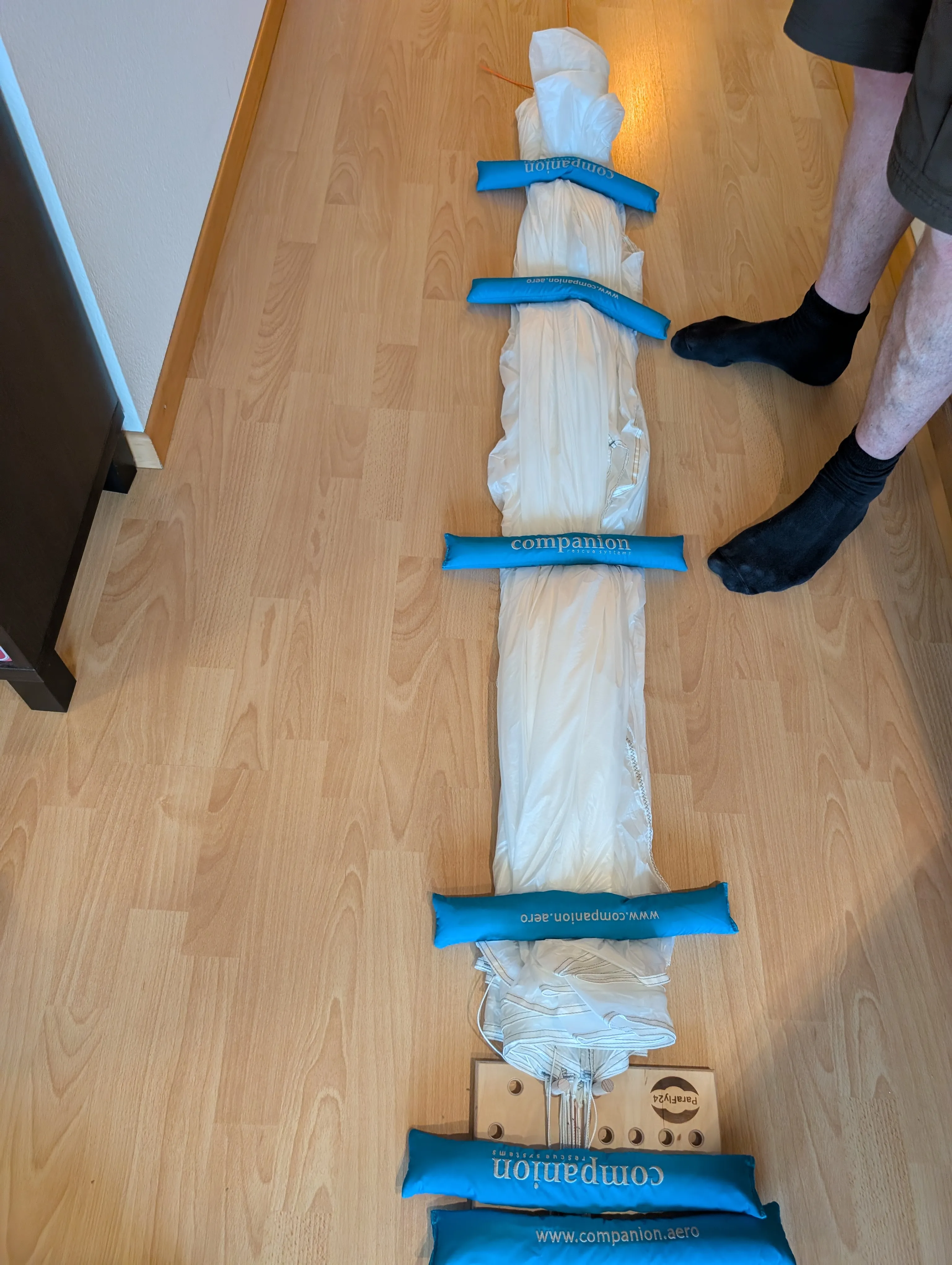
Our repack process goes beyond simply folding the rescue back into the bag. We treat every rescue parachute as what it is: a life-critical device that must be in perfect condition and optimally packed to deploy reliably in a real emergency.
Full Inspection Before Packing
Before anything is packed, every component is inspected:
- Canopy fabric: tears, UV damage, delamination, mould
- Bridle and suspension lines: abrasion, knots, UV degradation
- Handle and deployment system: correct function, velcro condition
- Container and harness attachment points: wear and correct function
Any issues found are discussed with the owner before further action is taken.
Methodical Repacking
The rescue is packed using the manufacturer's recommended folding sequence to ensure:
- Correct deployment direction and sequence
- No line tangles or snags on opening
- Optimal opening speed, not too fast (jerk), not too slow (altitude loss)
- Container closure that holds securely but releases instantly on pull
We pack round rescues (classic dome), square rescues (modern, steerable), and Rogallo-type (different design entirely). Each has distinct packing requirements.
📚 A Little Theory, Why Packing Quality Matters
The physics of emergency parachute deployment leave no room for error. When a pilot pulls the handle, the container must open, the pilot chute must inflate and extract the main canopy, all lines must deploy tangle-free, and the rescue must fully inflate, all within a few seconds and a few hundred metres of altitude.
Round rescues (classic dome shape) are simple, robust, and reliable. They have high drag and open quickly. However, they are not pendulum-stable, which could increase the risk of a faster "touchdown" if landing with pendulum swing. Limitation: not steerable, you land where the wind takes you, requiring careful pilot awareness in mountain terrain.
Square rescues are modern designs offering fast opening times and better pendulum stability compared to round rescues, which could reduce impact significantly, a big advantage. Modern square rescues are around 1 kg. These days, this is what we recommend to everyone.
Rogallo (Beamer) type rescues are a distinctly different design with different aerodynamics. They are steerable and have a significantly lower sinking speed than other rescue types, but they only function well when the main glider is "killed" (no longer flying). We only recommend this type for acro pilots and experienced pilots with quickout/quick release carabiners. Rogallo rescues are not suitable for schooling and beginners.
The goal of a proper repack is not just to get the rescue back in the bag, it is to ensure that if you ever need it, it opens exactly when and how it should.
Prices
Transparent pricing, no hidden fees
✈ Glider Checks
| Service | What's included | Price |
|---|---|---|
| Full Check without tensile strength test |
Porosity test, full visual inspection (canopy, lines, risers), laser line length measurement, trimming (symmetry & angle of attack), small hole repair, written report | CHF 300 |
| Soft Links add-on to Full Check |
Additional work required for gliders using soft links (Dyneema loops) instead of metal maillons | + CHF 30 |
| Full Check + Tensile Strength Test includes 2 replacement lines |
Everything in Full Check, plus tensile strength testing of all line groups and replacement of up to 2 lines as needed | CHF 350 |
Rescue Repack
| Service | What's included | Price |
|---|---|---|
| Rescue Repack, Round Classic dome rescue |
48h humidity treatment (~60% RH), full inspection (canopy, lines, handle, deployment), methodical repacking, repack card & service record | CHF 90 |
| Rescue Repack, Square Modern steerable rescue (recommended) |
48h humidity treatment (~60% RH), full inspection (canopy, lines, handle, deployment), methodical repacking, repack card & service record | CHF 90 |
| Rogallo Repack Rogallo-type rescue |
Full Rogallo repack service through partner technicians | CHF 100 |
Ready to Fly Safe?
Don't wait until the next season to check whether your equipment meets safety standards. Book your glider check or rescue repack today, it takes less than a week, and it might save your life.
💬 Message Miki on WhatsApp ✉ Send an EmailOr call/text: +41 77 976 61 64